



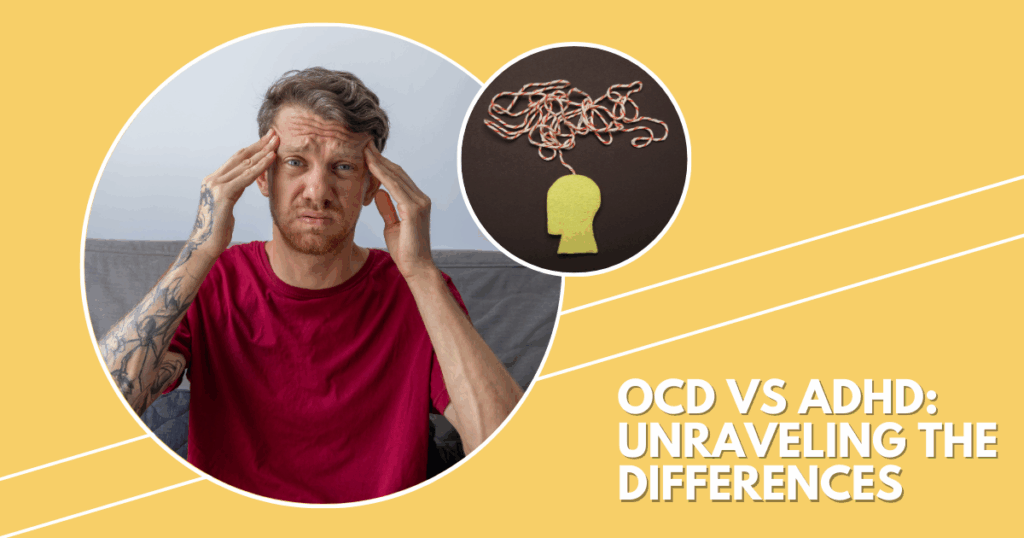
The misconception about OCD and ADHD is that the two disorders are likely to occur in the same way, as they affect concentration, behavior, and normal lives. An individual with an obsessive-compulsive disorder might seem distracted, as opposed to the individual with attention deficit hyperactivity disorder, who may seem restless or impulsive. These circumstances might appear similar externally. The way that the brain works is very different.
These differences are significant to understand since the diagnosis, treatment, and therapy depend on them. Whenever patients are given a wrong diagnosis, they can be given wrong treatment, and this can deteriorate their mental condition instead of enhancing it.
Understanding OCD Vs ADHD
Obsessive-compulsive disorder is a condition in which a person is unable to stop unwanted thoughts, becoming frightened by, or fantasizing about what they do not desire. To reduce the anxiety caused by these thoughts, a person may repeat certain behaviors or mental acts, known as compulsions.
For example, an individual may feel compelled to wash their hands repeatedly due to a fear of germs, even though they realize the behavior is irrational. Attention-deficit hyperactivity disorder operates through a different mechanism. It affects the brain by altering concentration, impulse control, and energy levels.

An ADHD person may fail to sit down and concentrate on what they are doing or even to concentrate and organize their thoughts. They are not out to be careless and difficult. Their brains are not able to process information in the same way, which makes it difficult to slow down and focus.
Both conditions are linked to brain chemistry and structure. Mental health experts, such as the National Institute of Mental Health, state that OCD and ADHD engage various regions of the brain that regulate behavior, attention, and feelings.
OCD vs. ADHD: Key Differences
The fundamental difference between OCD and ADHD is what drives the behavior. In OCD, the actions are performed in order to decrease anxiety. In ADHD, behaviors occur due to poor impulse control or lack of concentration.
Someone who has OCD might do something over and over again since they are afraid that something bad will occur if they fail to do it. An individual with ADHD might forget, interrupt, or move around frequently since their brain struggles to slow down.
OCD has its basis in fear and anxiety. Attention and self-control problems form the basis of ADHD. Both conditions affect daily life differently. This is why one-size-fits-all advice doesn’t work.
Common Symptoms of OCD and ADHD
- Repeated unwanted thoughts or fears in OCD.
- Rituals or habits are done to reduce anxiety in OCD.
- Trouble paying attention in ADHD.
- Being easily distracted is a symptom of ADHD.
- Acting without thinking in ADHD.
- Feeling stressed or overwhelmed in both conditions.
This overlap of symptoms leads to confusion between the two by many people, although they have different causes.
Diagnosis Challenges in OCD and ADHD
It is not always easy to get the correct diagnosis of OCD or ADHD. These conditions often occur together. An individual who has ADHD can be considered obsessed with a particular interest, whereas an individual with OCD can be considered distracted due to the constant intrusive thoughts.
Mental health professionals consider the behavior, the personal history, and the emotional patterns. They use interviews and checklists to learn about what is happening in reality. Centers like the Mayo Clinic describe how critical assessment can prevent errors.

The Importance of Accurate Diagnosis for Mental Health
Long-term mental health requires a correct diagnosis. In cases where the person with OCD is only given ADHD treatment, they might not experience improvement in anxiety and compulsions. The concentration and impulse control of a person with ADHD may not be improved when they are treated as if they have OCD. When physicians understand what they are treating, they can choose the proper therapy and medication that will lead to effective treatment.
Treatment Options for OCD and ADHD
| Condition | Main Treatment | Therapy Type | Medication Used |
| Obsessive-compulsive disorder | Reduce obsessions and compulsions | CBT and exposure therapy | SSRIs |
| Attention-deficit hyperactivity disorder | Improve focus and impulse control. | Behavioral therapy | Stimulants or non-stimulants |
Both disorders require specific medication. OCD treatment involves safely facing fears. ADHD management focuses on the establishment of structure and enhancement of attention.
The Role of Therapy in Managing OCD and ADHD
One of the most effective treatments for both states is therapy. In the case of OCD, cognitive behavioral therapy assists individuals in confronting their anxieties and gradually overcoming their compulsive behaviors. For ADHD, therapy helps develop such skills as time management, emotion regulation, and organization. The American Psychological Association provides a clear explanation of the mechanism of these therapies and their efficacy.
Medication Considerations for OCD and ADHD
Drug therapy may be helpful, but not for everyone. The drugs that treat OCD do so by regulating anxiety-related brain chemicals. Patients with ADHD can take medication to enable the brain to be alert and focused. The doses are chosen and tailored by doctors to avoid any side effects and, also, to make sure that the treatment process is effective.
Getting Support at Shine Mental Health
OCD or ADHD does not mean that a person has to live alone or without help. At Shine Mental Health, patients are well cared for by trained staff who are aware of both diseases. Your overall mental health and well-being are important to the team, whether you need help with diagnosis, treatment, or medication.
FAQs
What are the key differences in symptoms between obsessive-compulsive disorder and attention-deficit hyperactivity disorder?
Obsessive-compulsive disorder involves unwanted thoughts and repeated actions done to reduce anxiety. Attention-deficit hyperactivity disorder mainly affects focus, impulse control, and activity levels.
How do mental health professionals diagnose OCD and ADHD, and what challenges do they face?
They use interviews, behavior history, and symptom checklists to make a diagnosis. The main challenge is that some symptoms overlap, which can make it harder to tell them apart.
What treatment options are available for managing symptoms of OCD and ADHD?
Treatment usually includes therapy, medication, or both. The goal is to reduce distress in OCD and improve focus and control in ADHD.
How does therapy play a role in the management of obsessive-compulsive disorder and attention-deficit hyperactivity disorder?
Therapy teaches people how to manage thoughts, emotions, and behaviors. It helps people with OCD face fears and helps people with ADHD build better daily habits.
What should be considered when using medication for OCD and ADHD treatment?
Doctors look at age, health, and symptoms before choosing medication. They also monitor how well it works and adjust it to support better mental health.